Iona Institute NI

  • Home
  • About
    • Iona NI Board
    • Contact
  • Press Releases
  • Blog
  • Donate
  • Events
  • Resources
    • A Mother’s Reflection on the Gift of Children

      Posted at 11:54 am by ionainstituteni
      Jul 23rd

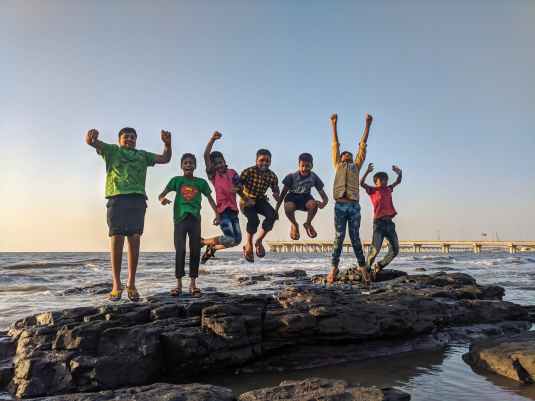
      For the past twenty years my life has been surrounded by children. As a mother of eight God continues to teach me much through them. Children make us better people. They keep us grounded and prevent us from becoming self-absorbed. From the first moment of that dreaded early pregnancy sickness we learn to sacrifice our own comfort for another. They challenge us and have an immense capacity for unconditional love and forgiveness.

      Children have an ability to evoke the strongest emotions in us – intense love, protectiveness, annoyance, and impatience. How much we can learn from children! They make us keenly aware of both our strengths and our weaknesses. Being in their company is good for us. We are challenged to forget ourselves and put their needs first

      One of my favourite images of Jesus is a sketch of him laughing heartily surrounded by children. The picture shows him with a little smiling boy on his knee while another hugs his neck from behind.  I love contemplating this image as it is exactly as I understand Jesus to be around children: playful, loving and right in the middle of things.

      As children how easily our hearts and minds open up to the reality of God’s love for us and to our true identity as His beloved sons and daughters. Jesus elevated children, famously chiding his apostles from preventing them coming to him after a very long day of public ministry.

      “Let the little children come to me and do not hinder them, for the kingdom of heaven belongs to such as these” (Mathew 19:14).

      I was just nineteen years old when a family friend who was also a Christian brother handed me an audio cassette tape called ‘Contraception, why not’ by a professor Janet E Smith. It was certainly an odd title but as she was a sociologist and this was my area of study at university I was immediately interested. It was an intriguing talk, factual, compelling and even entertaining. I was completely convinced after hearing her sixty minute presentation that Church teaching on human life was both progressive and prophetic. As the years passed and I encountered the many myths, inaccuracies, and open hostility to this area of Church teaching I am so grateful to that family friend for simply handing me that little tape which provided such clarity on this important area at such a young age.

      Being pro-life is not about having baby after baby. It is about both generosity and responsibility. It is about taking the time to get to know our God given biology as men and women and working with nature rather than against it. It is about a healthy respect for the gift of procreation and exercising discernment and prudence within our own particular circumstances. It is also about not judging other couples whether they have one child or ten!

      Yet in today’s ailing culture a horrible mindset has taken hold. A mindset which deems large families as irresponsible. Welcoming children into this world is no longer viewed as a blessing and a privilege but a choice that we must control at all costs. If that child is diagnosed in the womb with a disability that choice is extended in many countries up to the point of birth. With the advent of new ‘designer baby’ techniques and three person embryos the ability to exercise control over new human life has reached disturbing new levels. At a time when materialism and medical advances are at an all-time high, the most basic of children’s rights are at an all-time low. As well as taking away the very right to life from children in the womb some countries have decided that born children don’t even have the right to know the identity of their natural mother or father.

      This obsession with controlling new life has permeated deep into our culture and our communities. When I was in hospital having my last baby word quickly spread that I was having number eight. I was a constant source of bewilderment and pity. I mean I seemed normal enough but what on earth was wrong with me? Eight children in this day and age!

      What is it about children that has become so threatening to our adult world? How have they become the target of countless laws and policies which are determined to control and even extinguish their existence when they are at their most vulnerable? This beautiful gift of new human life has been rejected, demeaned, and exploited under the guise of choice and compassion.

      The so-called progressives of our age in their pursuit of radical adult centred ideologies have ironically stripped children of the most basic rights of all. The right to be born once conceived and the right where possible to a mother and father’s love are now dependent on adult choice and protected in law in many supposedly developed countries.

      In the developing world it is children that continue to be the greatest casualties of war, famine, and disease. As pope Francis pointed out “In a world where there is so much wealth, so many resources to feed everyone, it is unfathomable that there are so many hungry children.” (Pope Francis 2013)

      And yet the paschal mystery at the heart of Christianity holds up a radical and countercultural message. One that shows us that true happiness comes from giving of ourselves and putting our own needs second place. We were made in the image and likeness of God who in Jesus showed us all the true meaning of sacrificial love.

      This is the narrow path that Jesus invites us to climb as his followers. To serve rather than be served. This is how we discover our true identity as children of God and find true peace.

      Despite the many challenges and even chaos children can bring us, our love for them gives us plenty of opportunity to climb further up that narrow path. Whether we are a sleep deprived new parent or working overtime to pay the mortgage. Whether it is struggling to monitor a fourteen year old’s screen time or debate a curfew with a sixteen year old. We need endless amounts of patience and perseverance. Most of all though we need to be praying parents actively seeking God’s intervention in our children’s lives. And ultimately we need to be trusting parents who know that despite the wrong choices our children may make, and despite our own shortcomings, our efforts and prayers are never wasted. We entrust their lives to our heavenly Father who knows and loves each child, uniquely, and passionately.

      In this 50 year anniversary of the publication of Humane Vitae, we need honestly to reflect upon and share with renewed vigour and clarity the beauty and wisdom of Church teaching on openness to new life and the immense gift that children are to our broken humanity.

      Tracy Harkin

      Posted in Blog | Tagged Children, Family, Humanae Vitae, Motherhood
    • Pro-Life Community Leaders at Westminster

      Posted at 2:00 pm by ionainstituteni
      Jul 18th

      A group of community leaders from NI are visiting Westminster today (18/7/18) to tell MPs not to risk crippling devolution by imposing abortion laws on NI. MPs will hear from seven women, including a former Sinn Fein Mayor, a current DUP MLA, an SDLP councillor, and spokesperson for Iona NI Mrs Tracy Harkin.

      The message of the group is that there are many women across Northern Ireland who do not want the current abortion law to be changed. This comes within the context of ever greater pressure to undermine NI’s pro-life laws at Westminster. Recently some have called for a free vote in the House of Commons on Labour MP Stella Creasy’s proposed amendment to the Domestic Abuse Bill. If successful, this would see new abortion laws imposed on Northern Ireland, which would be even less restrictive than the current law in GB, despite the fact that abortion is a devolved responsibility for the Northern Ireland Assembly and has been so since 2009.

      Leading Conservatives, including the party’s deputy chair James Cleverly and the leader of the Scottish Conservatives, Ruth Davidson have warned against going over the heads of the Northern Ireland assembly, as has SNP MP Deirdre Brock. Polling by Both Lives Matter also showed a huge majority – 72 per cent – of Conservative MPs are against devolution being undermined by imposing abortion laws on Northern Ireland.

      Dawn McAvoy, co-founder of Both Lives Matter said: “It’s vital that MPs hear from women who live and work in Northern Ireland and who represent other women across the Province.There are a lot of myths about abortion law in Northern Ireland, it’s important for the GB public to know that women in NI do have access to safe and legal abortion, in carefully limited circumstances. There’s been a lot of noise about the “need” for new abortion law in Northern Ireland. This is being driven by pro-abortion campaigners who are trying to open up unlimited access to abortion. We represent some of the many Northern Irish women who reject this. We would urge British MPs to respect the people of Northern Ireland and our elected representatives. Our current law provides proper protection for both the mother and the unborn baby and we’ve found that many women have no desire for that law to be changed.”

      DUP NI Assembly Member for Upper Bann, Carla Lockhart, said:
      “I have constituents who are deeply concerned at the prospect of abortion on demand being foisted on Northern Ireland. We will be urging members of both Houses to respect the sincere and deeply held views of many in Northern Ireland about abortion as well as the role of the Northern Ireland Assembly. Abortion was fully devolved to the Assembly in 2009. Any move to liberalise our abortion laws through Westminster would be unreasonable and disrespectful to the democratic process in Northern Ireland. Such significant change would undermine the principle of devolution. It would be short-sighted and foolish in the extreme to take advantage of the current political complexities at Stormont to impose such controversial legislation over our heads.”

      Former Sinn Fein Mayor, Ann Brolly, said:
      “The devolved administration in the north of Ireland was hard won and is currently very fragile. If MPs are serious about respecting it then they will not legislate above the heads of our elected representatives. All across the north there are many women, of different political persuasions who do not want this sort of imposition and I would strongly urge MPs to listen to the views expressed today.”

      The most recent consideration of abortion by the NI assembly was in 2016 and showed a clear majority against changing our pro-life laws. Let us hope that Westminster politicians listen to us today.

      Posted in Media | Tagged Abortion, Westminster
    • Google Doodle Honours Georges Lemaître

      Posted at 6:00 am by ionainstituteni
      Jul 18th

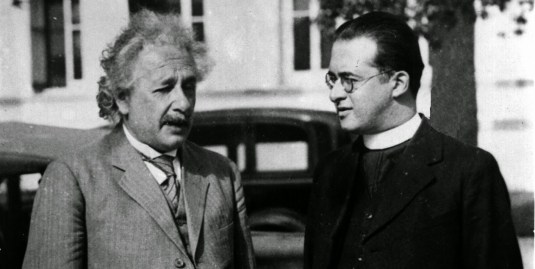
      The Google doodle on 17/7/18 honours Fr Georges Lemaître for his 124th birthday: https://www.mirror.co.uk/tech/who-georges-lematre-google-doodle-12929928. Fr Lemaître was a Catholic priest and astronomer and professor of physics at the Catholic University of Leuven. He held a number of innovative views in physics, but what he is rightly well known for is his proposal of the primeval atom which later became known as the big bang theory of the origin of the universe.

      Fr Lemaître originally studied civil engineering, and after the first world war began studying physics and mathematics. At this same time he began his studies for the priesthood (during these studies he came into contact with Desiré Mercier, the well known philosopher working in Leuven at the time). He obtained his doctorate in 1920 and was ordained a priest in 1923. He also became a graduate of astronomy at Cambridge.

      After his studies he began lecturing at the Catholic University and publishing articles on various topics, in particular on the expanding universe. It was while in London in 1930 that he proposed the primeval atom theory for the origin of the universe, and he developed the view in a 1931 article in Nature, ‘The Beginning of the World from the Point of View of Quantum Theory’, a theory that we have noted later became known as the big bang theory. In 1936 Lemaître was elected a member of the Pontifical Academy of Sciences and in 1941 he was elected to the Royal Academy of Sciences and Arts of Belgium.

      Towards the end of his life he remained devoted to thinking through issues in physics and mathematics, and this despite the attempt to appoint him to the papal commission exploring the issue of contraception (an appointment that he did not think he was able for given his lack of expertise in moral philosophy or theology). Fr Lemaître died on 20th June 1966, just after the discovery of the cosmic microwave background radiation which provided evidence for his theory of the origin of the universe.

      Lemaître received a number of honours in his life, rightly so given his brilliant career. Today the international space station is named after him, and he is an important figure in 20th Century physics, astronomy, and cosmology.

      It is good to see an example of the unity of faith and reason in the life of this priest and scientist. The unity is such because what is sought after in both is truth, and it is by means of both that one can arrive at truth. As Fr Lemaître himself states: ‘I was interested in truth from the point of view of salvation just as much as in truth from the point of view of scientific certainty. It appeared to me that there were two paths to truth, and I decided to follow both of them’.

      Dr Gaven Kerr

      Posted in Blog | Tagged Big Bang, Religion, Science
    • Morality, Religion, and the Natural Law

      Posted at 10:04 am by ionainstituteni
      Jul 17th

      With the falling popularity of the study of academic philosophy, and the preference for academic subjects that are seen to lead more securely to employment, the public discussion of morality has suffered somewhat. When one comes to study academic philosophy, a course in moral philosophy (hopefully several) is usually essential (along with metaphysics, epistemology, and logic). Whilst one can get a smattering of philosophy in other academic subjects, one rarely gets the opportunity to study it in depth unless one undertakes a course in philosophy. That then entails that there is a general lack of recognition in public discussion of philosophical issues, and this particularly is the case with the discussion of moral matters.

      In general, there is an awareness of some conclusions that are adopted in moral reasoning, especially with regard to hot button social issues that have their roots in moral philosophy. These conclusions did not come from nowhere, and significant voices in the philosophical tradition have offered reasoning on their behalf. But because of the lack of awareness of moral philosophy and often only a smattering of philosophy from elsewhere, the conclusions are known, but not their means of demonstration (indeed, in my experience of teaching moral philosophy, the very notion of demonstration in moral matters is one that has to be neatly and gently laid out before any exploration of the thinking of a particular philosopher is considered).

      Now, moral philosophers are not the only individuals to draw conclusions in moral matters, the Church does so as well. And it is often the case that a moral philosopher draws the same conclusion as the Church, e.g. a number of moral philosophers agree with the Church that murder is wrong. But it is often assumed that a moral position advocated by the Church on some particular issue is one that is defended on the basis of religious belief and not on the basis of natural reason.

      However, the latter view is incorrect. The natural law position in morality that is adopted by the Church is not one that depends on revelation for its cogency, nor does one even have to believe in God in order to accept that position. Indeed significant defenders of the natural law have explicitly stated that it can be known by all without recourse to God; so for instance John Finnis in Natural Law and Natural Rights, pp. 48 – 49 states clearly that knowledge of God is not needed for knowledge of the natural law, and indeed he states that part II of his book is an articulation of the natural law without advertence to the existence of God, His nature, or will; Aquinas argues that the principles of the natural law are self-evident, and its further precepts can be elucidated on the basis of rational reflection on human nature (Summa Theologiae, IaIIae, qu. 94, art. 2: http://dhspriory.org/thomas/summa/FS/FS094.html#FSQ94OUTP1).

      What the natural law position in morality maintains is that human beings have a nature and given that their actions are rationally willed, in order for humans to flourish as the kind of things they are, humans ought to order their actions in a way consonant with that nature. This is not a moral position that depends on God or revelation for its cogency, but simply on philosophical argumentation, as Finnis, Aquinas and others have articulated it. It stands in contrast to other moral theories, in particular utilitarianism and deontology; and it, like them, is defensible on the basis of natural reason.

      The point here is that whilst natural law reasoning may coincide with the Church’s position in moral matters such reasoning does not depend on religious belief. In that case, the conclusions that the Church adopts on the basis of the natural law are not conclusions immune from philosophical discussion and scrutiny or indeed defence (they are not matters of faith), since they have publicly accessible reasons on their behalf. But if they have publicly accessible reasons, then they are as much up for grabs in the public discussion of moral matters as those defended from other moral perspectives.

      Dr Gaven Kerr

      Posted in Blog | Tagged Morality, Natural law, Philosophy, Religion
    • Infant Baptism

      Posted at 10:17 am by ionainstituteni
      Jul 5th

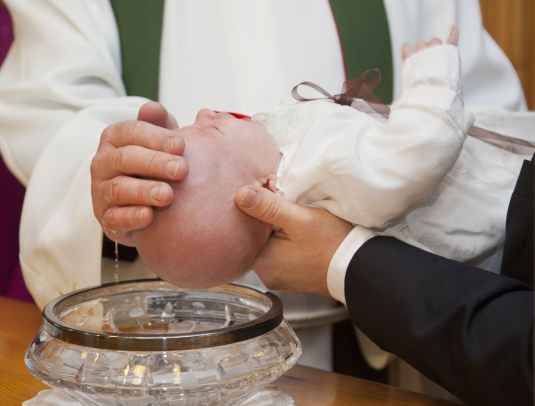
      Mary McAleese recently denounced infant baptism as a form of conscription into the Catholic Church. Her remarks have caused an uproar and generated a lot of discussion. Always in such discussions there are many and varied viewpoints, but two particular themes have emerged in the voices of those who would endorse Mrs McAleese’s position or something like it. The first is that infant baptism is wrong because it inaugurates a child into a particular religion before he or she can make any choice in the matter; the second is that infant baptism is not a biblical practice, and so ought not to be pursued. Mrs McAleese’s objections to infant baptism will be appearing in her doctoral dissertation, and so until I get a chance to look at and engage with that I shall pass over her remarks and focus on the two general issues noted in the public discussion.

      The first issue can be dispensed with quite easily. Outside of the religious context, parents make all sorts of choices on their children’s behalf. These range from quite significant life and death choices when they are newborn, to various decisions affecting their lives as they grow. The reason why parents make these choices on behalf of their children is because children are not mature enough to make such decisions for themselves; yet these decisions have to be made. So for instance, parents make decisions on a child’s diet, home, school, social media access, internet access etc. Not only that, parents in nearly all cases make the unconscious decision about what language the child will speak, what community he or she will be brought up in etc. Parents make these decisions on behalf of their children because they ideally want what’s best for them. The same is the case then when it comes to religion. Ideally parents want what is best for their children, and so when it comes to introducing them to a religion, they often introduce them to the religion that has been the best for them (the parents). This often involves some sort of rite, and in Christianity it involves baptism. But indeed if the parents make the choice that no religion is good for their children because they (the parents) do not think any religion is worth pursuing, that is still a choice that is made on the child’s behalf, a choice the child can reject later in life just as the religious child can reject religion. Hence the initiation of an infant into a religion or not is not itself any more problematic that introducing a child to a form of life with a particular diet, home life, language, cultural community etc.

      We are then led nicely to the second issue. Ideally we make choices for our children because we want what is best for them, and for many that is to introduce them to a religion at an early age, and for Christians this often entails baptism at the earliest age. But the argument is made that such a practice is not biblical, that infants can be brought up in a Christian environment without baptism and that it should be deferred until they can choose it for themselves. But when we look at the biblical witness of the matter, we notice that baptism is associated with salvation (e.g. Jn 3:5, Rom. 6:3-11). It is not a mere rite of initiation, but the means by which original sin is cleansed from the infant. Whilst it is true that the infant has not committed any actual sin, the infant is subject to the state of original sin to which all humans are subject, and thereby deprived of something he or she would have had were it not for being in such a state. Baptism is the sacrament by which that state is removed and the one baptised may be able to enter heaven. Hence the motivation for baptising infants is that they may participate in such a good.

      Furthermore, in Pauline theology, St Paul takes Christian baptism to be the circumcision of Christ, such that those baptised need not be physically circumcised; this was a particularly dominant theme of Paul’s preaching (e.g. Col. 2:11 – 12). The NT practice of baptism has taken over from the OT practice of circumcision. But just as it was usually infants who were circumcised, so too then we can take it that it is infants who are baptised (aside of course from first generation Christians or newly converted Christians).

      Not only that, we have scriptural witness to entire households being baptised, e.g. Lydia’s household in Acts 16:15, the Philippian jailer and his family in Acts 16:33, and the household of Stephanas in 1 Cor 1:16. Hence it was a known practice to baptise children as well as adults, and this no doubt because of the fact that baptism is the primary means by which one is saved in Christ.

      The earliest witness of the post-apostolic Church takes infant baptism as a matter of course, no surprise is expressed by it, the earliest known baptismal ritual makes mention of infants, and it was a practice that had the support of notable Church Fathers (http://www.vatican.va/roman_curia/congregations/cfaith/documents/rc_con_cfaith_doc_19801020_pastoralis_actio_en.html). All in all then the practice of infant baptism is not something new or anything radically divergent from scripture.

      Infant baptism is a practice that is tied in with parents’ wishing the best for their children. Baptism is the sacrament by which the person can be free of original sin and thereby able to enjoy the benefits of salvation. Making a choice of religion for one’s child in this respect is not just about educating him or her within a Christian community, ensuring attendance at a Catholic school, bringing him or her up within the faith; unless the child is baptised, the child cannot participate in the benefit that the sacrament offers. So when the Catholic parent makes the decision to have the child baptised, it is ideally because that parent sees the great good offered by the sacrament, and wishes that good for the child.

      Dr Gaven Kerr

      Posted in Blog | Tagged Bpatism, Catholicism, God, Religion
    • ← Older posts
      Newer posts →
    • Sign up for our eNewsletter!

      Please follow this link to sign up to receive our regular eNewsletter.

    • Be Social

      • Facebook
      • X
      • Email
    • Enter your email address to follow this blog and receive notifications of new posts by email.

    • Recent Posts

      • Iona Conference, a resounding success!
      • Press Release on 30th March Conference, “The Future of Conscience in an Age of Intolerance”
      • Conference 30th March 2019: ‘The Future of Conscience in an Age of Intolerance’
      • BBC Top Table show predictably sets narrow frame for discussion on abortion
      • Calls for complete decriminalisation of Northern Ireland’s abortion law are reckless and extreme.
  • Iona NI Board

    PATRONESS

    Baroness Nuala O'Loan DBE, MRIA


    BOARD

    Chair:
    Alban Maginness BA (Hons), LLM, BL

    Secretary:
    Mary Lewis BL

    Board Members:
    Brett Lockhart QC
    Declan O’Loan BSc, PGCE, MBA
    Tracy Harkin
    David Quinn
    Éamonn Gaines


    PERSONNEL
    Leah Gaines, Office Administrator


  • Iona Institute NI

    The Iona Institute NI is a sister organisation to the Iona Institute.
  • Donate

    Please help us continue our work, click below to find out how.

    How to Donate

Create a website or blog at WordPress.com

  • Subscribe Subscribed
    • Iona Institute NI
    • Join 64 other subscribers
    • Already have a WordPress.com account? Log in now.
    • Iona Institute NI
    • Subscribe Subscribed
    • Sign up
    • Log in
    • Report this content
    • View site in Reader
    • Manage subscriptions
    • Collapse this bar
 

Loading Comments...