Iona Institute NI

  • Home
  • About
    • Iona NI Board
    • Contact
  • Press Releases
  • Blog
  • Donate
  • Events
  • Resources
  • Category: Blog

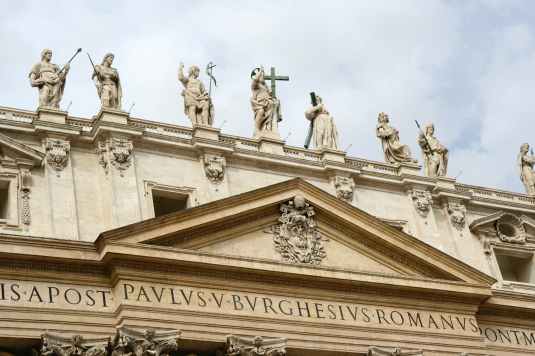
    • Canonisations of Bl Oscar Romero and Bl Paul VI

      Posted at 1:01 pm by ionainstituteni
      Oct 11th

      On Sunday 14th October Bl Oscar Romero and Bl Paul VI will be canonised in the Catholic Church. What this means is that whilst they are already considered blessed and thus subject to local veneration, they will now be venerated throughout the Church. Both of these saints were remarkable men in the 20th Century, and both showed heroic virtue in their own ways.

      Pope Paul VI’s heroism is noted chiefly by his publication of Humanae Vitae which reiterated and re-affirmed the Church’s teaching on artificial contraception and human sexuality. Humanae Vitae was not well received in many quarters, and despite immense pressure, Pope Paul VI held out and defended the truth. This year marks the 50th anniversary of the encyclical and it is timely for us to reflect on it. The Iona Institute NI delivered a set of lectures earlier this year on Humanae Vitae and they can be found on our YouTube page here.

      Oscar Romero exhibited his heroism in another, more traditional manner.

      Romero was the archbishop of El Salvador and was critical of the violence and oppression of the time. He spoke out on behalf of the poor and sought to uphold the human rights of his flock. He was shot while celebrating Mass March 24, 1980 and he was beatified by Pope Francis May 23, 2015.

      Bl Romero is often considered a socialist saint and a radical because of his advocacy for the poor at the time and his opposition to government forces of the right. This is an unfortunate designation as the Church does not work within the confines of left and right; rather the Church is focussed on the human person and the dignity of the person. Should that dignity be undermined by repressive capitalist regimes, the Church speaks out; should it be undermined by repressive socialist regimes, the Church likewise speaks out. Having the good of all human beings in her heart, the Church advocates for the rights and dignity of the individual and does not swing in favour of one group identity or the other. This at times will entail opposing the establishment at the time, as Pope Leo XIII writes in Quod Apostolici Muneris, the encyclical on socialism, n. 7: ‘…[I]f the will of legislators and princes shall have sanctioned or commanded anything repugnant to the divine or natural law, the dignity and duty of the Christian name, as well as the judgement of the Apostle, urge that “God is to be obeyed rather than man”’. This was Bl Romero’s heroism, having the will of God in his heart and the good of every human person as his motivation he expressed outrage at the treatment of the poor and downtrodden for which he died a martyr. He was a martyr of neither the left nor the right, but for the truth about the dignity of the human person which is at the heart of all Christian social engagement.

      Both of these saints are a witness to us to stand firm in defence of the truth, and to resist pressures whether they be to our reputation to our life.

      Dr Gaven Kerr

      Posted in Blog | Tagged Justice, Oscar Romero, Paul VI, Pope Francis, Saints
    • After Birth Abortion

      Posted at 6:00 am by ionainstituteni
      Oct 5th

      In 2012 Alberto Giubilini and Francesca Minerva published a paper in the Journal of Medical Ethics arguing that given the same moral status or lack thereof between a foetus and a new born baby, the same conditions that would justify the killing of the foetus also justify the killing of the new born. Their argument is structured around what they take to be the fact that neither the new born nor the foetus is a person (a highly disputable assumption), in which case it is not subject to a moral right to life in which case the rights and interests of actual persons, such as the mother, people in society etc, ought to take priority. They consider the potentiality objection to the effect that both the foetus and the new born are potential persons and so should be afforded the rights that all persons have; they reject this objection arguing that no harm is done to a potential person by not allowing such an entity to develop into a person. They also reject the adoption objection to the effect that adoption would be a better option than abortion or after birth abortion since they do not believe that it is straightforwardly true that the mental health of the mother would be better in the adoption case than in the abortion/after birth abortion case; and if in this case the interests of what they take to be an actual person (the mother) should prevail, then after birth abortion should be a valid alternative to adoption.

      After birth abortion is a real issue and not just an academic matter; this is because when abortions are carried out post-viability sometimes they are not successful and the doctor along with supporters of abortion are left with a conundrum. On the one hand the mother has approached the doctor for an abortion, and in the majority of cases what this entails is a termination of the pregnancy and the death of the child. But in cases where the abortion is unsuccessful, the pregnancy is only terminated but the child is not dead.

      Given that the mother has requested an abortion, does this extend only to the termination of pregnancy or should it extend to the death of the child?

      If one holds that an abortion is unsuccessful unless the child’s life is ended, then one is left with the uncomfortable conclusion that the infant born alive should have its life ended; and if one does not recognise the right to life of this infant then one cannot recognise the right to life of any other infant. Hence Giubilini and Minerva’s conclusion follows and abortion, on this view, can be justifiably extended post-birth.

      On the other hand, if one holds that in requesting an abortion a termination of pregnancy is sufficient but not termination of life (presumably because the infant born as a result of a failed abortion has a right to life), then one can query why the infant has a right to life only after being born but not whilst in utero. Indeed, the birth of the child is a rather arbitrary limit on the right to life such that an infant born alive after an unsuccessful abortion is no different from the same child in utero just prior to the abortion.

      All of this goes to highlight a central feature of Giubilini and Minerva’s argument, and this is that if the right to life is only extended to individuals of a certain maturity or a gestational limit, then any limit to that right is arbitrary and the goal posts can be moved from 12 weeks to 26 week to full term to after birth and beyond. Indeed, once the limitation to the right to life comes to depend on some arbitrary point, the being in question ceases to have any right to life, but merely enjoys the privilege and benignity of those in power over him or her. In reality, the only limit to the right to life is not being the kind of thing subject to such a right. So, human beings are the kinds of things subject to a right to life, and so the limit on that right is that of not being a human. But this entails that the right to life cannot be based on any gestational limit or beyond, in which case the unborn child has as much a right to life as the newborn and beyond.

      Dr Gaven Kerr

      Posted in Blog | Tagged Abortion, Right to Life
    • Human Dignity and the Culture of Death

      Posted at 12:57 pm by ionainstituteni
      Sep 27th

      Something Rotten

      ‘Something is rotten in the state of Denmark’. This is the lament of the bard at the moral and political degradation of society and it is a lament that many proclaim about Western society. We see so many news items, political developments, international developments etc that we can’t help but be led to the conclusion that there is something rotten at the heart of our society and it needs fixed.

      There are many diagnoses of what is happening in society and what has gone wrong over the years; indeed a very popular narrative is one that delineates various group identities and holds that society is broken because certain groups are privileged over others, and this creates a state of inequality, with the privileged acting as the de facto oppressors of those not so privileged. When we fix this oppression we will fix society.

      The group identity diagnosis may have some appeal to it, but it overlooks a key element of any society, and this is the dignity of the individual person. The group identity narrative overlooks the dignity of the individual and subsumes the individual to the identity of the group. The individual’s dignity and all the rights and freedoms that flow from that don’t matter on this account, but the rights of the group and one attains these rights only when one identifies with the right group (https://ionainstituteni.org/2018/09/20/the-price-of-peace/).

      In order then to overcome this displacement of the individual by the group identity we have to come to terms with what is rotten in society by means of a focus on the person and how our society is so cultured that the person and his dignity have been overlooked. This personalist approach to human dignity was a key feature of the thinking of St John Paul II, and his thought stemming from this on the culture of death can help us to understand what is rotten in our society.

      Human Dignity

      In previous posts I have focussed on the issue of human dignity, and it will be worthwhile to reiterate the basic principles of dignity before connecting it to the culture of life and death in this post.

      Human dignity is rooted in the nature of human beings. We humans are rational animals, and as rational we have intellects which can understand the world and a will by which we can engage and act in the world. Central to having intellect and will is the ability to see a choiceworthy end and to will it for ourselves. As rational beings, we humans are able to determine our ends for ourselves; cabbages or goldfish on the other hand cannot.

      So far so good, but where is the moral dimension to this?

      The moral dimension follows from the fact that insofar as we are able to determine our ends for ourselves, we ourselves cannot be treated as the means for some other’s end; to do that, i.e. to treat a person as a means and not an end in himself would be to treat him as less than human, as something with no more moral status than a goldfish or cabbage. Human dignity then is based on human nature and its ability to determine its end for itself; any violation of that nature is a violation of human dignity.

      Violations of human dignity are easily found in numerous places; we see such violations in abortion, euthanasia, torture, abuse, slavery etc all of which subvert the being of one person to the ends or goals of another.

      The Culture of Death

      One may think that the culture of death refers to a situation wherein there are violations of human dignity the typical result of which is death, e.g. abortion and euthanasia. But this would be too simplistic an understanding of the culture of death. One could have a culture wherein there is no abortion or euthanasia and it could still be legitimately called a culture of death. And here is why.

      We noted that when we violate human dignity, we make use of humans for our own purposes and do not respect their dignity as ends in themselves. Thus, human dignity is violated when humans have only a use but not a value. Now think of things that we use; things which have a use are made use of for the purpose of some goal, e.g. money is used to buy food which is used to preserve life. The means themselves have no value except for bringing us to the goal – the means have only instrumental value. Money and food are valued in this instance because they go to preserve life, whereas the life that is being preserved has a value in itself (otherwise we wouldn’t give up our money or use food in order to preserve it).

      Things that are only of use but not of value are deemed valueless and only have value in the measure that they can lead to or preserve what we value. When we use things to achieve our ends we finish with them when our ends have been achieved; hence they are now valueless, dead. So for example, when food is taken to preserve our lives, we take from it what we need and the rest is waste; as waste it is of no value to us as food and is therefore valueless. A culture wherein everything is of use and nothing is of value is a culture of death; for once something has been used up, it no longer has any significance. A culture that does not respect human dignity, doesn’t value humans and has no problem with subverting their use to the ends of others. Once used, humans then are dead, valueless, to those who use them. So even though a culture may not adopt practices that result in the death of those that we use, it can still be a culture of death insofar as it envisages humans as things of use.

      Promoting a Culture of Life

      A culture of life is a culture which values human beings for the dignified creatures that they are. In being able to consider and determine choiceworthy ends, human beings resist being objects of use in their very nature. Humans are not usable things, and to make use of a human for one’s own end is to treat him as less than human. Hence, human nature resists being used. The only appropriate stance that one ought to take to a fellow human being is one of love.

      Now, talk of promoting a culture of life is often taken as promoting the eradication of practices that undermine life, e.g. campaigning against abortion. What we are effectively doing in this regard is seeking to promote a culture wherein human beings are not seen as legitimate objects of use for others, but loved as ends in themselves. Unless a society can be formed in which human beings are treated as objects of love rather than of use there will always be something ‘rotten in the state of Denmark’. So we may not have practices such as abortion and euthanasia which lead to death, but we may still have a culture wherein people are worth nothing more than as instruments for the goals of others, e.g. when big business uses but does not value its lowest paid, when men and women use but do not value each other in sexual relations, when government uses but does not value its citizens. When such devaluation occurs, the people involved are dehumanised and not loved for the dignified beings that they are. Only when we love our fellow humans as they are meant to be loved will we have a genuine culture of life.

      Dr Gaven Kerr
      Posted in Blog | Tagged Culture of Death, Culture of life, Human dignity, John Paul II
    • The Price of Peace

      Posted at 6:00 am by ionainstituteni
      Sep 20th

      Friday 21st September marks the international day of peace which is a day devoted to strengthening the ideals of peace amongst all nations and peoples. 2018 marks the 70th anniversary of the Universal Declaration of Human Rights, a document which appeared just after the second world war and almost half a century of warfare. It is thus prudent to reflect on peace in relation to the universal declaration.

      The opening line of the preamble to the UDHR attributes peace in the world to recognition of the inherent dignity of all humans. Now, for those without a background in philosophy, the recognition of dignity and its association with peace may appear as a platitude with no substance to it. But there are genuine reasons, reasons familiar to drafters of the UDHR such as Charles Malik, for affirming human dignity and connecting it with peace. What then is human dignity and how does its recognition foster peace?

      Human Dignity

      Humans are rational substances, i.e. they are the kinds of things that are rational. In being rational, humans have an intellect and will. As so constituted, human beings can determine ends for themselves and pursue those ends. To treat a human being as an instrument for the pursuit of one’s own ends is to treat him or her as less than human; and this is because when we use a human for one’s own ends we undermine that very capacity which is essential to their humanity.

      No human then ought to be treated as a means to an end but only as an end in itself.

      Now, something very significant follows from this, and it is that the only attitude that we ought to have to other human beings is one of love. This is because, to treat someone as an end requires willing their good for themselves and not subverting them to our own good. But to will the good of another is to love the other. Hence it follows that the only appropriate response to another human person is to love that person.

      Peace

      By stressing the recognition of human dignity in the first line of the preamble to the UDHR the authors have latched onto a very important feature of human nature and relations: if we do not treat other people with the dignity that they deserve, i.e. if we do not give to others the love that is their due, then we are maltreating our fellow humans. This maltreatment divides humans from each other and from it war and division emerge. Hence to avoid such division we must recognise the dignity of every human being.

      Thus, peace flows from the recognition of human dignity; for when we genuinely recognise the dignity of another person, i.e. that he or she is to be treated as an end, an object of love, and not a means, an item for use, there is fostered unity between persons.

      The price of peace then is the recognition of human dignity.

      The Challenge of Peace

      It is not always easy to recognise human dignity. In the world right now many human beings are not being treated as ends in themselves, as objects of love. Rather they are being treated as objects of use for the ends of others. We need only look at the high abortion rates in many parts of the western world where it is often looked upon as a right to pass over the dignity of a high number of our fellow humans. In countries where euthanasia is legal and widely practised fully mature humans are being treated as a means to others’ ends, hence their dignity is being overlooked. And there are of course all the other states of affairs which fail to recognise human dignity, e.g. torture, slavery, abuse, domestic violence etc.

      All of these divide humans from each other and undermine peace in the world and amongst our fellow humans.

      Aside from these cases there is a prevailing ideology in the world which historically stands contrary to human dignity and which indeed drives the aforementioned cases of lack of recognition of dignity. This ideology is one which stresses the importance of group identity over the dignity of the individual, so that so long as the identity of some privileged group is recognised/upheld/lauded etc, we have a just and equitable society. It is this stress on group identity, to the detriment of the dignity of the individual, which drives totalitarian regimes and abuses of humanity. The 20th Century is replete with examples where the individual was sacrificed for the good of the group; one need only look to the Nazi and communist regimes for particularly horrific examples of this. Effectively, the identity of the group, characterised by its particular ideology and dogmas, subsumes the identity of the individual so that the individual has no dignity or worth except for the value he or she has to the group. Nazism and communism are particularly extreme examples of this, but the philosophy which informs it is common to all social movements which hold that certain individuals do not matter, have no dignity, or have no rights simply because they are not part of or do not contribute to the privileged group.

      The challenge of peace then is to avoid the constant temptation to put all our faith in an ideology which characterises the group, but to focus on the dignity of the human individual before us, and affirm that regardless of age, ability, disability, gender, sexual orientation etc, every human individual is a being worthy of love and whose dignity ought to be affirmed. When we do this we foster a relationship between humans which is the foundation of peace.

      Dr Gaven Kerr

      Posted in Blog | Tagged Dignity, Peace, War
    • What about the children?

      Posted at 1:46 pm by ionainstituteni
      Sep 13th

      The campaign for same sex marriage in N.I. and other countries is loud, persistent, and extremely well funded. It is supported by an ever increasing array of public representatives, businesses and corporations. This is hardly surprising considering it is always framed in terms of ‘marriage equality’ ‘positive social change’ and even ‘human rights’. Those that are against ‘marriage equality’ are portrayed as religious fundamentalists, homophobic, or both. This frame perpetuated unquestioningly by our media only serves to  create an us and them mentality. Imagine what it feels like to be gay and to be repeatedly told that those who oppose gay marriage despise you and want to deny you equality! Homophobia like sectarianism, racism, and other hate filled attitudes, exists and it is indeed possible that some people who are opposed to SSM fall into this category. It is however incredibly misleading and insulting to portray  those opposed to redefining marriage as anti-equality and homophobic (otherwise in France alone for example, the over one million brought out by Le Manif pour Tous would every one of them have to be deemed homophobic: http://www.catholicherald.co.uk/issues/may-15th-2015/the-french-counter-revolution/).

      Considering how the debate is currently framed by the media, it is actually surprising that only 25 out of 195 countries worldwide have so far legalised same sex marriage.

      Any discussion surrounding redefining marriage by the state therefore should have at its core three simple questions: What is marriage?  Why unlike every other human relationship is it regulated by the state and has the status of an institution?  Who does this institution benefit and why?

      Marriage has always been understood to be a sexual (conjugal) union involving one man and one woman naturally ordered to be procreative. Unlike all other human relationships this sexual union is one which brings new life into the world. We know through anthropological study that before the creation of church or state marriage existed in some primitive form and had some form of regulation by those in authority. The main reason for this is obvious but increasingly needs to be pointed out in today’s culture and that is children! The state has a vested interest in the wellbeing of the next generation and it was seen as an unquestionable good for children to be raised by their own biological parents where at all possible. The development of marriage and its status in countries worldwide as an institution, making it the recipient of certain rights and benefits, was society’s way of acknowledging that mothers and father matter especially to children.

      Does this mean that children who are and always have been reared in all types of different situations either by single parents, grandparents, or same sex couples, are less than any other child? Of course not! But we can all agree that  every child ever conceived has a mum or dad and when circumstances such as death, separation, poor mental health, etc, prevent that child from being raised by that parent, this is usually understood as being a loss to the child.

      Marriage is the institution in society that encourages the natural ties between children and their parents. The desire to know our identity is rooted in each one of us. In the Irish language the terms ‘Mac’ and ‘Ní’, ‘son of’ and ‘daughter of’ reflect this reality. What has happened in countries like Ireland and the UK following the legalisation of gay marriage should be of concern to anyone genuinely interested in the wellbeing of children. When marriage is redefined children’s rights are redefined. Two men cannot make a baby and neither can two women. Following the legalisation of gay marriage there is an increased demand by same sex couples for egg or sperm donation. These are generally sourced from European sperm banks. In the UK two parents of the same sex can now legally appear on a child’s birth certificate and the Republic of Ireland seems set to follow suit. Children can now be deliberately deprived of even knowing the identity of their biological parents. How is this progressive or in the interests of children?

      Modern marriage of course is not only about children. It is about love, commitment, and wanting to have your love publicly recognised. Some couples cannot have or choose not to have children. But the fact remains that the vast majority of couples who marry will have at least one child together and children are the main reason that marriage ever became regulated by the state in the first place. If marriage is simply to become a romantic relationship with no relation to children, why should the state bother to regulate for it at all? And why should those in romantic or sexual unions have special status as opposed to two siblings living together or two friends? In Columbia, less than a year after gay marriage was legalised, the state legally recognised a three man union (throuple). In the United states there is currently a movement underway to legalise polygamy. In the Republic of Ireland to men married to avoid inheritance tax. Marriage is being redefined out of existence.

      The reality is that we live in a pluralist society where people can live whatever way they want. Retaining marriage as it is in law and practice does not in any way prevent same sex couples from living together and rearing children together. Civil partnership laws grant couples in this position all necessary rights, given that in the UK there are no substantive legal differences between civil partnerships and marriages. By retaining marriage law as it is states are recognising the huge (and well documented) benefits for children in being raised by their own parents. In giving marriage special recognition within the law, the state encourages its citizens to recognise and take responsibility for rearing their own biological children where possible. Surely this can only be a really good thing.

      Tracy Harkin

      Posted in Blog | Tagged Children, homophobia, Same sex marriage
    ← Older posts
    Newer posts →
    • Sign up for our eNewsletter!

      Please follow this link to sign up to receive our regular eNewsletter.

    • Be Social

      • Facebook
      • X
      • Email
    • Enter your email address to follow this blog and receive notifications of new posts by email.

    • Recent Posts

      • Iona Conference, a resounding success!
      • Press Release on 30th March Conference, “The Future of Conscience in an Age of Intolerance”
      • Conference 30th March 2019: ‘The Future of Conscience in an Age of Intolerance’
      • BBC Top Table show predictably sets narrow frame for discussion on abortion
      • Calls for complete decriminalisation of Northern Ireland’s abortion law are reckless and extreme.
  • Iona NI Board

    PATRONESS

    Baroness Nuala O'Loan DBE, MRIA


    BOARD

    Chair:
    Alban Maginness BA (Hons), LLM, BL

    Secretary:
    Mary Lewis BL

    Board Members:
    Brett Lockhart QC
    Declan O’Loan BSc, PGCE, MBA
    Tracy Harkin
    David Quinn
    Éamonn Gaines


    PERSONNEL
    Leah Gaines, Office Administrator


  • Iona Institute NI

    The Iona Institute NI is a sister organisation to the Iona Institute.
  • Donate

    Please help us continue our work, click below to find out how.

    How to Donate

Create a website or blog at WordPress.com

  • Subscribe Subscribed
    • Iona Institute NI
    • Join 64 other subscribers
    • Already have a WordPress.com account? Log in now.
    • Iona Institute NI
    • Subscribe Subscribed
    • Sign up
    • Log in
    • Report this content
    • View site in Reader
    • Manage subscriptions
    • Collapse this bar
 

Loading Comments...