Iona Institute NI

  • Home
  • About
    • Iona NI Board
    • Contact
  • Press Releases
  • Blog
  • Donate
  • Events
  • Resources
    • Attempts to introduce Same Sex Marriage into NI via Westminster

      Posted at 1:38 pm by ionainstituteni
      Mar 27th

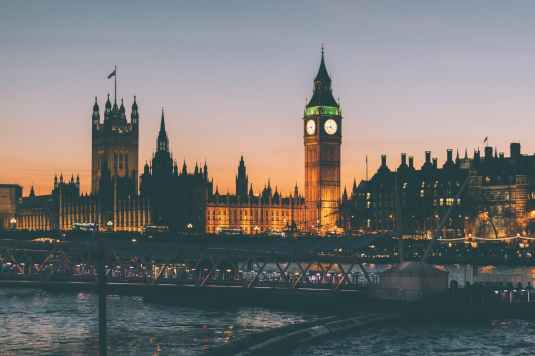
      In the past few days, bills have been introduced at Westminster with the intent of bringing same sex marriage to NI. The first appeared in the house of Lords under Lord Hayward and the second appeared in the house of commons under Conor McGinn; see details here: https://www.belfasttelegraph.co.uk/news/northern-ireland/westminster-bills-call-for-samesex-marriage-in-northern-ireland-36747032.html.

      The first thing to be said about this matter is that whilst NI has MPs that sit in Westminster, Westminster is not representative of NI; our assembly represents us in which case this matter should be devolved to the assembly. Given the current circumstances of our assembly, we are unable to deal with this issue locally; but that does not entail that one ought to seek the introduction of same sex marriage in NI by an elected body which does not represent NI. What in fact is happening here is that people with a certain view about the nature of marriage are seeking to have that view enshrined in law regardless of the process that gets us there.

      That then leads nicely to the second point, since this is not merely a matter of political expediency but a fundamental disagreement over the nature of marriage and whether or not same sex relationships are in fact marriages. If we turn to the European Convention of Human Rights and its article on marriage (article 12) it reads as follows: ‘Men and women of marriageable age have the right to marry and to found a family, according to the national laws governing the exercise of this right’. So if we begin here, the human right to marry is a right that men and women have and it involves founding a family. This is important in two respects: firstly, it ties the right to marry to men and women, hence it does not envisage such a right as pertaining to members of the same sex; secondly, it envisages this right as being involved in founding a family, hence those who marry have the right to found a family. The language is important in this latter respect because it does not say ‘to have a family’ but ‘to found a family’. Given that this right envisages the founding as opposed to merely having of a family, it is natural that it links marriage with men and women, i.e. opposite sex couples, since it is only men and women who are able to found, as opposed to have, a family. Thus, what this right encapsulates is that form of human relationship that is found in every society whereby men and women come together so as to found a family. This does not exclude those who are infertile, since the infertile can come together in such a relationship, but owing to circumstances accidental to that relationship, e.g. matters pertaining to health, a family cannot be founded; yet it does exclude same sex couples since same sex couples cannot found a family, not because they are infertile but because the relationship as such is not one that is ordained to the founding of a family. Hence there is no human right to same sex marriage.

      Now whilst there may be no human right to a same sex marriage, some would argue that there ought to be a political right. And this is where local legislative bodies come in – to give same sex couples the same legal protections as opposite sex couples. But in order to give same sex couples the same legal protections as opposite sex couples one need not legislate for marriage and thereby envisage in law something that the ECHR doesn’t even envisage; rather one can legislate for civil partnerships. In the UK at least there is no substantive difference with regard to legal rights and entitlements between a civil partnership and a marriage. Indeed the document on the UK government website lays this out very clearly with the only differences involving technical legal and administrative issues over the difference in the kinds of relationships involved (you can access the document here: https://www.gov.uk/government/publications/comparison-of-civil-partnership-and-marriage-for-same-sex-couples).

      So same sex marriage is not a human right as envisaged by the ECHR, and same sex couples have access to all the same rights and privileges as opposite sex couples by being able to avail of civil partnership legislation. Consequently, there is no reason to introduce same sex marriage into NI.

      Dr Gaven Kerr

      Posted in Blog, News
    • Opportunities to learn about St Thomas Aquinas

      Posted at 10:46 am by ionainstituteni
      Mar 19th

      For all those who have an interest in the thought of St Thomas Aquinas but feel somewhat reticent (perhaps even daunted) about approaching this great thinker, there is some good news. Two initiatives are taking place this year which aim to make the thought of this thinker better known to an interested but perhaps non-specialist public.

      Firstly, the Aquinas Institute of Ireland will be having its annual summer school in Emmaus retreat centre Dublin, August 5 – 11. This is the seventh year of the summer school wherein people of all abilities come along to read the writings of Aquinas. The school caters to all levels from beginner to intermediate to advanced, and the reading groups are guided by experienced tutors who specialise in the thought of St Thomas Aquinas. Not only does this present a great opportunity for those who want to take some time to read Aquinas, but it is also an opportunity to get away from the world and spend a week with like minded people. The day is structured around prayer and reading and finishes at 2pm, at which time students have the opportunity to read, visit the chapel for adoration, socialise etc. Previous summer schools have been a great success and participants always leave feeling refreshed and with some confidence in their grasp of the thought of Aquinas. Participants this year will be reading Aquinas’s commentary on the Prologue to the Gospel of St John. For more information see the website: http://www.aquinasinstitute.ie/#home

      Secondly, the Priory Institute Tallaght is launching its MA programme in Aquinas studies. This will be a certified course which will result in a masters degree for the student. In this course students will have the opportunity to learn about the life of Aquinas, his metaphysics, ethics, philosophy of religion, theology, not to mention the chance to learn enough Latin to read his original writings. The degrees from the Priory Institute are taught via distance learning, with some residential weekends through the semester. They thus provide an excellent opportunity for people who wish to pursue a programme of study but who are constrained for various reasons. For more details on the MA in Aquinas studies see the Priory Institute website here: https://prioryinstitute.com/news/2018/march/ma-in-aquinas-studies

      Now, for anybody who has heard of St Thomas Aquinas but does not know who he is, herein is a very brief biography. St Thomas was born in 1224 in Italy in Roccasecca near Monte Casino. He was initially sent to study with the Benedictine’s at Monte Casino, but because of conflict between the Emperor Frederick II and the pope Gregory IX when Thomas was about 14/15 he was sent to study at the University of Naples. It was here that he was introduced to two major influences in his life: the philosophy of Aristotle and the Dominican Order. An Irishman, Peter of Ireland, who was a member of the Order of Preachers (the Dominicans), taught him philosophy, wherein he learnt not only of Aristotle, but also of the Islamic (Averroes and Avicenna) and Jewish (Maimonides) philosophical traditions.

      A few years later at the age of 19 Thomas decided to join the Dominican order to the horror of his family. This was seen as something of a disgrace by his family, who wanted him to join a more prestigious order such as the Benedictines. So they undertook to kidnap him as he was travelling to Rome (and further to Paris for his studies). St Thomas was set upon by his brothers, and when they tried to remove his Dominican habit the gentle St Thomas fought them off but went willingly with them. He was duly locked within his family castle for one year. During that year his family tried to break his resolve by introducing a prostitute into his room. Seeing the woman, Thomas prayed inwardly, took a burning log from the fire, and chased her from his room locking the door from the inside and burning a cross on the door. After this he prayed that he would never be tempted in the flesh and that night he dreamt that he was girded by two angels in answer to his prayer (it is this event which is the inspiration for the angelic warfare confraternity whose members pray daily for purity in the world).

      Realising they could not break his resolve, Thomas’s family permitted his return to the Dominicans and on to Paris where he would study with another great thinker of the time, St Albert the Great (also a Dominican). Thomas was initially very quiet as a student and earned the nickname of the Dumb Ox. St Albert one day set the students a difficult problem in logic and the students could not resolve it. Wanting to tease the Dumb Ox, Thomas’s fellow students asked him to solve it, which he did. This impressed St Albert who then took the young Thomas under his wing.

      Thomas quickly progressed through his studies and academic career, teaching in various places and institutions throughout Europe. By all accounts St Thomas never felt worthy of the trust others had placed in him to work in theology. He worked tirelessly and wrote voluminously. In a writing career of about 20 years he produced 10 million Latin words which equates to about 30 million English words. That is  1.5 million words per year, or about 4,100 words per day.

      St Thomas is not only known for his theology but also for his great sanctity. One particular story stands out that when composing a treatise on the Trinity he was having great difficulty, and in tears he went to the altar and placed the treatise on the ground and wept in prayer. The crucifix above him spoke the following words: ‘You have written well of me, Thomas. What reward will you receive from me for your labour?’, Thomas’s response was: Non nisi te, Domine – Nothing but thyself Lord.

      In December 1273 , whilst saying mass, Thomas was struck during the elevation of the host, so much so that his socius Reginald had to get his attention. After this Thomas put away all his writing materials, and when encouraged to write and to finish his Summa Theologiae  all he could say was: ‘I can’t’ [the Summa Theologiae remained unfinished]. Evidently Thomas had a complete nervous and mental breakdown after this event at mass. Thomas later revealed to Reginald that the reason he could not go back to work was that everything he had done seemed like so much straw compared to what he had seen. Thomas was later summoned to the Council of Lyons in 1274, but along the way he had an accident; while he was travelling he hit his head on an overhanging branch and was quite stunned. His brethern helped to get him to the nearby Cistercian abbey of Fossanova wherein he died on 7th March 1274.

      St Thomas Aquinas was not just a typical university professor who locked himself away and wrote on matters that only a handful of people could engage with at his level. He was certainly that, but he was only that because of his deep love for God and his yearning to know Him more Who was his friend. This is the man that you have the opportunity to get to know through the Aquinas summer school and the Priory Institute MA in Aquinas studies.

      Posted in Uncategorized
    • Death of Stephen Hawking

      Posted at 1:50 pm by ionainstituteni
      Mar 15th

      Prof. Stephen Hawking passed away yesterday 14/3/18 at the age of 76 and by all accounts he died peacefully in his home. Prof. Hawking was a world renowned physicist not only for his work on big bang cosmology (originally theorised by Catholic priest George LeMaitre) and his work on black holes, but he also popularised modern physics to a general reading public.

      Whilst a research student I read A Brief History of Time and his interpretation of big bang cosmology such that there are no boundary conditions and so no beginning of the universe. I then read uncomfortably his suggestion that with no beginning of things there was no need for a cause. This was uncomfortable for me because as a philosophy student schooled in logic it appeared to me that Hawking committed a clear fallacy of denying the antecedent: if x has a beginning it has a cause, x does not have a beginning therefore it does not have a cause. Recognising this fallacy I then related it to the medieval discussion, particularly of Thomas Aquinas, of the possibility of a beginningless created universe. This is to the effect that the universe could be without a beginning and yet have a cause; the typical metaphor for this is that an eternal foot is the cause of an eternal footprint on an eternal sandy beach.

      Realising that Hawking’s remarks brought him into dialogue with medieval views in philosophy prompted me to do research on the metaphysics of creation which in turn prompted me to investigate more in depth Aquinas’s proof for God in the De Ente et Essentia. The former work led to the publication, ‘A Thomistic Metaphysics of Creation‘, Religious Studies (2012), 48 pp. 337 – 356, and the research into the proof of God led to a book with Oxford University Press, Aquinas’s Way to God: The Proof in the De Ente et Essentia.

      Stephen Hawking had a real gift for presenting modern physics to a contemporary public, and perhaps unknown to himself his engagements have brought him into dialogue with perennial themes in the philosophical tradition, particularly in this case the medieval tradition represented by Aquinas. Hopefully part of his legacy will be that more people take seriously the task of thinking about the origins of the universe and our place within it.

      Dr Gaven Kerr

      Posted in Uncategorized
    • The Catholic Church: An Empire of Misogyny? Mary Lewis LLM responds to Mary McAleese.

      Posted at 10:41 am by ionainstituteni
      Mar 15th

      The following is a guest post written by Mary Lewis LLM of the Iona Institute NI.

      EMPIRE OF MISOGYNY

      Former Irish President Mary McAleese recently excoriated the Catholic Church as an “Empire of Misogyny.”  The lack of women in leadership roles within the church and the lack of strong role models for women to look up to within the Church, led her to make this accusation. Since her denunciation, the media has been awash with reaction, including a poll by Liberal.ie which concluded that 80% of Irish people agreed with her. I for one – an Irish Catholic woman, wife, mother and barrister and more recently a student of theology, disagree.

      LEADERSHIP

      The earthly leader of the Catholic Church is the Pope and he has always been male. Well, why couldn’t a female be a Pope, a bishop or even a mere priest? That misses the point, earthly leaders, whether male or female, are nothing before Christ the King. Christ selected twelve apostles, all of whom were male. That cannot just be glossed over.  “Christ Jesus, who although God, …emptied himself, taking the form of a servant, being born in the likeness of men. And being found in human form, he humbled himself and became obedient unto death, even death on a cross.” (Phil 2:5-9).

      Christ, who instituted the male priesthood, is our guide on all things including who is called to be a priest. Above all, Christ came to serve, even though He is all powerful. He did not “cling to his equality with God,” (Phil2:5-9) so mere human beings should not seek self-aggrandisement either. Instead we must be obedient to His will.

      This apostolic tradition of a male only priesthood must be followed, if we are to be true to Christ’s name. The sacrifice made by those men called to be priests, is analogous to the sacrifice Christ made for the Church- his bride. This nuptial meaning remains important, perhaps more so nowadays, when the meaning of marriage is under scrutiny and even attack.

      ROLE MODELS

      As for female role models in the church, it is amazing that Mary McAleese has failed to notice the dozens of women saints the Church venerates daily- starting with Mary the Mother of God, whose name she shares. Our Lady was chosen by God as mother of Christ. She accepted with humility the greatest role a human being has ever been offered. Without Our Lady’s assent, Christ would not have been born and there would have been no sacrifice by Christ in His Passion and Resurrection, much less a priesthood. Essentially the Catholic church would not have existed without her. No woman should feel belittled or inferior because of Christ’s selection of men for priesthood any more than a man should resent not being selected as mother of God.

      There are many Catholic women who have led extraordinary lives in the Church. I can quickly think of three who were around during Mary McAleese’s lifetime: Firstly, Mother Angelica who founded a global television network for evangelization on a shoestring. Secondly St Teresa of Kolkata (Mother Teresa) who is widely revered for her love and care for the poorest and most neglected and who had an ability to inspire and influence world leaders as well as the ordinary person in the pew. Her own personal struggles in her faith have been an encouragement to many to persevere when struggles arise, as they always do in life. Thirdly St Katharine Drexel was a wealthy heiress who set up a religious community of sisters serving the Native American and African communities in particular in the United States. She was an educationalist and missionary with an immense love for the Eucharist.

      Going back some centuries to the fourteenth century, the great Dominican Saint- St Catherine of Siena was a mystic, philosopher and theologian. She is now regarded as a Doctor of the Church. She travelled widely throughout Europe including to Avignon where she met Pope Gregory XI and is credited with having prevailed upon him to return to Rome from his exile in Avignon.

      The truth is that seeking leadership should not be the primary goal for any Catholic, male or female. Rather we should emulate St John the Baptist’s advice: “He (Christ) must increase that I may decrease.” (John 3:30)

      This message is easily forgotten nowadays, possibly because “Our world no longer hears God because it is constantly speaking, at a devastating speed and volume, in order to say nothing.” (The Power of Silence Cardinal Robert Sarah, p. 74(2017)).

      Posted in Uncategorized
    • Huge Support for Pro-Life Rally to Save the Eighth

      Posted at 12:28 pm by ionainstituteni
      Mar 14th

      Our honorary chairman, Alban Maginness, writes of the pro-life march in Dublin on Saturday 10/3/18 when people from all over Ireland turned out to show their support for the eighth amendment in the Irish Constitution. This amendment recognises the right to life of the unborn child in the womb and thus establishes Ireland as a nation which constitutionally values the lives of its unborn citizens.

      In his article Mr Maginness notes that there is still huge public support for the eighth amendment and for what it stands, as evidenced by the turn out on Saturday. Given such support, political leaders in the South such as Leo Varadkar, Micheal Martin, and Mary Lou McDonald, appear to be out of touch with the electorate in their support for scrapping the eighth amendment.

      As Mr Maginness notes: ‘The right to life is the very foundation for all human rights, and to undermine the right to life of the unborn is to imperil human rights fundamentally’.

      Read the full article here: https://www.belfasttelegraph.co.uk/opinion/news-analysis/weekends-huge-demonstration-in-dublin-shows-public-unease-at-attempt-to-scrap-8th-amendment-36701217.html


      Posted in Uncategorized
    • ← Older posts
      Newer posts →
    • Sign up for our eNewsletter!

      Please follow this link to sign up to receive our regular eNewsletter.

    • Be Social

      • Facebook
      • X
      • Email
    • Enter your email address to follow this blog and receive notifications of new posts by email.

    • Recent Posts

      • Iona Conference, a resounding success!
      • Press Release on 30th March Conference, “The Future of Conscience in an Age of Intolerance”
      • Conference 30th March 2019: ‘The Future of Conscience in an Age of Intolerance’
      • BBC Top Table show predictably sets narrow frame for discussion on abortion
      • Calls for complete decriminalisation of Northern Ireland’s abortion law are reckless and extreme.
  • Iona NI Board

    PATRONESS

    Baroness Nuala O'Loan DBE, MRIA


    BOARD

    Chair:
    Alban Maginness BA (Hons), LLM, BL

    Secretary:
    Mary Lewis BL

    Board Members:
    Brett Lockhart QC
    Declan O’Loan BSc, PGCE, MBA
    Tracy Harkin
    David Quinn
    Éamonn Gaines


    PERSONNEL
    Leah Gaines, Office Administrator


  • Iona Institute NI

    The Iona Institute NI is a sister organisation to the Iona Institute.
  • Donate

    Please help us continue our work, click below to find out how.

    How to Donate

Create a website or blog at WordPress.com

  • Subscribe Subscribed
    • Iona Institute NI
    • Join 64 other subscribers
    • Already have a WordPress.com account? Log in now.
    • Iona Institute NI
    • Subscribe Subscribed
    • Sign up
    • Log in
    • Report this content
    • View site in Reader
    • Manage subscriptions
    • Collapse this bar
 

Loading Comments...